

Municipal sewer systems operate quietly beneath the surface. However, when a leak occurs, the effects can spread quickly, causing sinkholes, pipe collapses, polluted waterways, and costly emergency repairs. Early sewer leak detection is essential for protecting public infrastructure, preventing service disruptions, and maintaining environmental compliance. For public works departments and government agencies, responding quickly and efficiently to a sewer leak is critical. Understanding what causes sewer leaks, how they are detected, and the proper course of action ensures systems stay reliable and communities stay safe.
What Causes Sewer Leaks?
Sewer leaks rarely happen overnight. Instead, they develop gradually as aging infrastructure, environmental conditions, and system pressures take their toll. The most common causes include:
Aging Infrastructure
Many municipal sewer systems were installed decades ago using materials like clay tile, cast iron, or unreinforced concrete. Over time, these pipes deteriorate naturally, making leaks increasingly likely.
Soil Movement and Ground Shifting
Seasonal freeze-thaw cycles, heavy rainfall, and long-term settlement can cause the ground to move. When soil shifts, pipes crack, separate at joints, or collapse entirely.
Corrosion and Material Degradation
Acidic wastewater, hydrogen sulfide gas, and external soil chemistry can cause the corrosion of pipes from both the inside and outside. Metal pipes are especially vulnerable.
Root Intrusion
Tree roots seek moisture and exploit even the smallest cracks or joints. As roots grow, they widen openings, create blockages, and cause structural damage.
Improper Installation or Repairs
Older systems may have misaligned joints, inadequate bedding, or poor-quality patchwork that becomes a weak point over time.
Heavy Traffic and Vibrations
Roadway vibrations and construction activities can weaken shallow sewer lines, especially those already compromised by age.
Regardless of the cause, sewer leaks must be addressed quickly to prevent larger failures and maintain system integrity.
How Sewer Leak Detection Works
Locating a sewer leak is not a matter of guesswork; it relies on a combination of modern technology, field expertise, and structured testing methods. Identifying the exact location of a leak helps determine the appropriate repair and prevents unnecessary excavation.
CCTV Pipe Inspections
CCTV inspection is one of the most widely used methods for sewer leak detection. A robotic crawler equipped with a high-resolution camera travels through the pipeline, capturing real-time footage of cracks, root intrusion, infiltration points, and structural defects. This visual assessment provides precise information without disturbing the surface.
Acoustic Leak Detection
Acoustic sensors are used to detect noise signatures caused by the escape of water or air within pressurized sewer systems. This method is especially effective on force mains, where leaks emit detectable acoustic patterns.
Smoke Testing
Non-toxic, visible smoke is blown into the sewer line. Any smoke escaping through the ground, utility lines, or adjacent structures indicates the presence and location of leaks or improper connections. Smoke testing is effective for identifying infiltration and inflow issues in gravity sewer systems.
Dye Testing
A bright, non-staining dye is introduced into the system to track flow movement and identify leak paths. If dye surfaces above ground or in unintended locations, crews can confirm the presence of a leak.
Flow Monitoring and Metering
Monitoring sewer flow during dry and wet weather helps identify infiltration issues. Unusual spikes in flow levels indicate a structural compromise allowing groundwater into the system.
Targeted Excavation (When Necessary)
If non-invasive detection methods confirm a leak location, excavation may be required to expose the damaged pipe and assess repair options. Modern detection reduces the need for extensive digging, helping municipalities avoid unnecessary costs.
Once a Leak Is Identified – What’s Next?
Municipalities must act quickly and strategically once a sewer leak is located to prevent further deterioration. The appropriate response depends on the severity, location, and cause of the leak.
Assess the Severity and Urgency
Some leaks require immediate emergency repair, especially if they threaten roadways, utilities, or public safety. Others can be scheduled as part of planned maintenance or capital improvement projects.
Stabilize the Affected Area
If the leak has caused soil loss or ground voids, immediate stabilization is needed to prevent sinkholes or structural damage. Traffic control measures may also be implemented.
Determine the Appropriate Repair Method
Municipalities typically choose between trenchless rehabilitation options and traditional repair based on infrastructure condition and project goals:
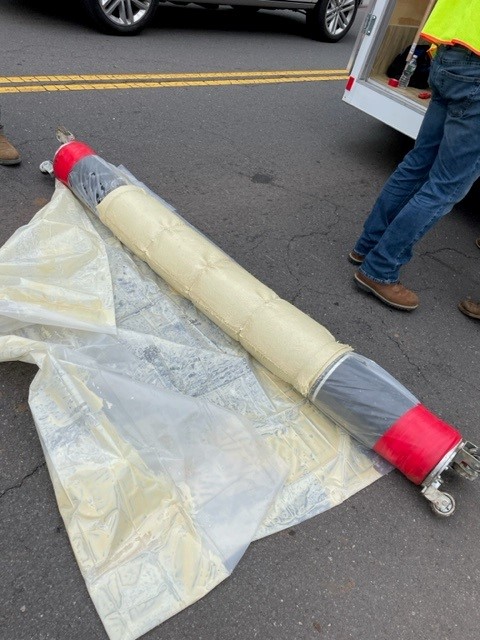
- CIPP (Cured-In-Place Pipe) Lining
A resin-saturated liner is inserted into the existing pipe and cured into a seamless, watertight structure, ideal for long sections of compromised pipe.
- Sectional or Point Repairs
Localized trenchless repairs that rehabilitate only the damaged section, reducing cost and disruption.
- Pipe Bursting
The existing pipe is fractured while a new pipe is pulled into the same alignment. Useful for severely damaged or undersized mains.
- Sliplining
A new pipe is inserted inside the existing one, restoring structural integrity and improving flow capacity.
- Traditional Open-Cut Repair
Used when structural damage is extensive or when the pipe cannot be rehabilitated using trenchless methods.
Verify System Performance
After repairs, CCTV inspection or flow testing confirms that the defect has been fully resolved and the system is operating correctly.
Update Municipal Records
Accurate documentation supports asset management programs and future capital planning.
Why Sewer Leak Detection Matters
Proactive sewer leak detection helps municipalities and public works agencies:
- Prevent sewer backups and overflows
- Reduce treatment plant costs by limiting groundwater infiltration
- Avoid emergency repairs and associated budget strains
- Maintain regulatory compliance with state and federal requirements
- Extend the lifespan of existing infrastructure
- Protect roads, utilities, and public buildings from hidden damage
Early detection is a critical component of responsible municipal asset management.
Expert Sewer Leak Detection and Repair
Montana Construction provides reliable, comprehensive solutions for diagnosing and repairing sewer system failures across New Jersey and Pennsylvania. With decades of experience in heavy civil construction and underground utility work, the company is equipped to handle complex detection, inspection, and repair projects for municipalities, utility authorities, and public agencies.
Our capabilities include CCTV inspection, trenchless rehabilitation, emergency repairs, and full pipeline replacement, allowing our team to tailor solutions to each project’s conditions and goals. Known for precision, safety, and efficient project execution, we remain a trusted partner for maintaining critical wastewater infrastructure.
Contact us to learn more about Montana Construction’s sewer leak detection and repair services.
Sewer Leak Detection FAQs
What is sewer leak detection?
It’s the process of identifying leaks or defects in sewer lines using CCTV, acoustic testing, smoke testing, and other diagnostic methods.
What causes sewer leaks?
Common causes include corrosion, aging pipes, soil movement, improper installation, and root intrusion.
How do municipalities detect sewer leaks?
Technologies such as CCTV inspections, smoke testing, dye testing, and flow monitoring help pinpoint issues without excavation.
When is excavation required?
Only when non-invasive methods confirm the leak location and repairs cannot be completed using trenchless rehabilitation techniques.
What trenchless options are available for sewer repair?
Municipalities often use CIPP lining, pipe bursting, or sectional repairs to restore pipelines with minimal surface disruption.
How quickly should sewer leaks be repaired?
Leaks should be addressed promptly to prevent sinkholes, sewer backups, and environmental contamination.
Why choose Montana Construction?
We offer extensive experience in sewer inspection, trenchless repair, and full replacement, providing reliable solutions for municipal systems.