

Manholes are often overlooked components of municipal sewer and stormwater systems, yet they play a critical role in system access, inspection, and flow control. When deterioration occurs, the consequences can extend far beyond the structure itself, contributing to infiltration, roadway damage, and increased system maintenance costs. Manhole rehabilitation services are a vital part of proactive municipal infrastructure management. Addressing manhole issues early helps protect underground assets, improve system performance, and avoid costly emergency repairs.
Manholes – A Vital Part of Municipal Infrastructure
Manholes serve as connection points between pipelines, access locations for inspection and cleaning, and critical junctions that help regulate flow throughout the system. Because they are exposed to constant moisture, chemical gases, and surface loading, manholes are often among the first components of a sewer system to show signs of deterioration.
Cracked walls, leaking joints, corroded surfaces, and displaced frames can allow groundwater to enter the system, increasing treatment costs and straining downstream infrastructure. Over time, these conditions may also weaken surrounding soils, creating voids beneath roadways and increasing the risk of collapse. Proactive rehabilitation ensures these structures continue to perform as intended.
What Are Manhole Rehabilitation Services?
Manhole rehabilitation services involve repairing, reinforcing, and sealing existing manhole structures to restore their structural integrity and prevent infiltration. Rather than removing and replacing the structure entirely, rehabilitation focuses on extending the manhole’s service life using specialized repair techniques and materials.
These services are commonly applied to sanitary sewer, stormwater, and combined systems. The goal is to address deterioration at the source, eliminating leaks, strengthening weakened areas, and ensuring long-term durability while minimizing surface disruption and cost.
Causes of Manhole Deterioration
Manholes deteriorate for several reasons, many of which are unavoidable in municipal environments:
- Material aging: Brick, concrete, and mortar degrade over time due to continuous exposure to moisture and wastewater gases.
- Infiltration and inflow (I&I): Groundwater enters through cracks, joints, and chimney areas, increasing system volume during wet weather.
- Chemical corrosion: Hydrogen sulfide gas and other compounds attack concrete surfaces, weakening the structure from within.
- Traffic loading: Vehicle weight and vibration can shift frames, crack chimney sections, and compromise alignment.
- Public safety concerns: Loose covers, settled frames, or failing structures pose risks to motorists and pedestrians.
Addressing these issues through rehabilitation helps municipalities reduce emergency repairs, extend asset life, and maintain compliance with environmental regulations.
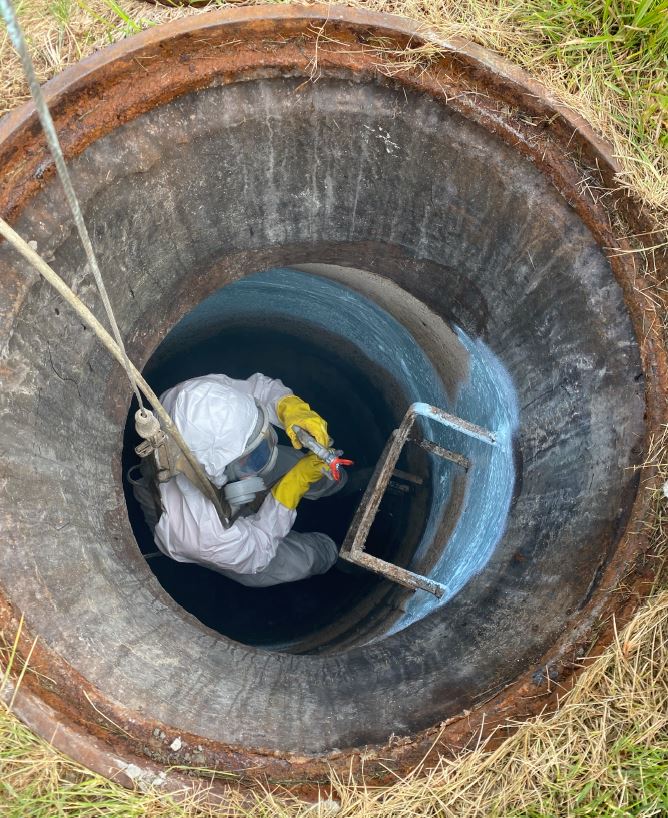
How Manhole Rehabilitation Services Work
The rehabilitation process begins with a thorough evaluation and progresses through carefully executed repair phases designed for municipal systems.
Inspection and Condition Assessment
Crews perform visual inspections and CCTV assessments to identify cracks, voids, corrosion, infiltration points, and structural defects. This evaluation determines the appropriate rehabilitation approach and materials.
Surface Preparation
Interior surfaces are cleaned using high-pressure water or mechanical methods to remove loose material, debris, and buildup. Proper preparation ensures repair materials bond correctly and perform as intended.
Structural Repairs
Damaged benching, walls, and inverts are rebuilt as needed. Chimney sections are repaired or adjusted to correct settlement, and frames may be reset to proper elevation.
Sealing and Lining
Cementitious or epoxy-based liners are applied to restore structural strength and seal the interior surfaces. Flexible seals may be installed at joints to prevent future infiltration.
Final Verification
Post-rehabilitation inspections confirm structural integrity, proper sealing, and overall performance before the manhole is returned to service.
When to Consider Manhole Rehabilitation
Municipalities often include manhole rehabilitation as part of broader asset management and capital improvement strategies. Common indicators that rehabilitation is needed include:
- Repeated infiltration issues or wet-weather overflows
- Visible cracking, corrosion, or missing mortar
- Frame or cover displacement due to settlement
- Preparation for sewer lining or pipe rehabilitation projects
- Rising wastewater treatment costs tied to excess inflow
Addressing manholes before undertaking pipeline rehabilitation ensures system-wide improvements deliver maximum benefit.
Why Professional Municipal Utility Contractors Are Essential
Manhole rehabilitation requires more than surface repairs. Confined work space, material selection, traffic control, and regulatory compliance demand specialized expertise. Improper repairs can trap moisture, accelerate corrosion, or fail prematurely.
Experienced municipal utility contractors understand how manholes interact with the surrounding system. They follow strict safety protocols, apply proven rehabilitation methods, and deliver results designed to withstand long-term exposure and loading. For municipalities, professional execution means fewer callbacks, reduced lifecycle costs, and improved system reliability.
Call Montana Construction for Manhole Rehabilitation
Montana Construction provides reliable manhole rehabilitation services for municipalities across New Jersey and Pennsylvania. With decades of experience in sewer and stormwater infrastructure, the company understands the challenges public agencies face when managing aging underground assets.
Montana Construction delivers comprehensive solutions, from inspection and structural repair to sealing and system integration, while maintaining a strong focus on safety, quality, and minimal community disruption. Their experience allows municipalities to incorporate manhole rehabilitation seamlessly into maintenance programs, pipe lining projects, and long-term infrastructure planning.Want to learn more about our manhole rehabilitation services or to discuss your municipal infrastructure needs? Contact our team today.

Manhole Rehabilitation Services FAQs
What are manhole rehabilitation services?
They involve repairing and sealing existing manholes to restore structural integrity and prevent infiltration without full replacement.
Why do manholes deteriorate over time?
Exposure to moisture, wastewater gases, traffic loads, and aging materials all contribute to deterioration.
How do municipalities know when rehabilitation is needed?
CCTV inspections, visual assessments, and recurring infiltration issues are common indicators.
Can manhole rehabilitation reduce infiltration and inflow?
Yes. Proper sealing and lining significantly limit groundwater entry into the system.
Is rehabilitation better than full replacement?
In many cases, rehabilitation is more cost-effective and less disruptive while extending service life.
Why should professionals handle manhole rehabilitation?
Specialized materials, confined space work, and regulatory requirements demand experienced municipal contractors.
How does Montana Construction support municipal projects?
They offer inspection, repair, lining, and rehabilitation services backed by decades of utility infrastructure experience.