

For municipalities and government agencies responsible for maintaining underground infrastructure, precision, safety, and efficiency are always top priorities. Traditional excavation methods, while effective, can sometimes pose unnecessary risks, such as damaging existing utilities, disrupting traffic, and increasing restoration costs. That’s why many public works departments and civil contractors are turning to hydro excavation services as a smarter, more controlled alternative for soil removal and utility exposure.
Hydro excavation represents a modern approach to excavation that combines cutting-edge technology with a respect for the complex infrastructure beneath the surface.
What Is Hydro Excavation?
Hydro excavation is a non-mechanical excavation method that uses a combination of pressurized water and an industrial-strength vacuum system to remove soil with precision. Unlike conventional digging with backhoes or excavators, this method doesn’t rely on heavy equipment breaking through the ground. Instead, a high-pressure water stream loosens the soil, which is then vacuumed into a debris tank for safe containment and disposal.
This process provides a clean and efficient way to expose underground utilities such as water, gas, sewer, and communication lines without causing damage. Because the excavation is controlled and targeted, hydro excavation allows work crews to perform delicate digging in areas where accuracy is critical.
For municipalities managing aging infrastructure or crowded underground networks, hydro excavation offers a level of precision that traditional methods simply can’t match.
Hydro Excavation in Civil Construction
In civil construction, the goal isn’t just to dig. It’s to uncover and install critical utilities safely and efficiently. Hydro excavation services are designed to help achieve that by giving crews the ability to excavate around existing infrastructure with confidence and control.
Typical applications include:
- Utility location and verification (potholing or daylighting): Safely uncovering existing lines before major excavation or installation work begins.
- Sewer and water system access: Exposing underground pipes for inspection, maintenance, or repair.
- Pole and sign installations: Creating narrow, precise holes for poles, foundations, or supports.
- Storm drain or catch basin installation: Working within confined or sensitive areas without disturbing surrounding structures.
- Emergency repairs: Quickly reaching buried utilities after a break or failure without causing additional damage.
Because hydro excavation eliminates much of the guesswork associated with traditional digging, it helps reduce the risk of costly errors, service interruptions, and safety incidents.
How It Works
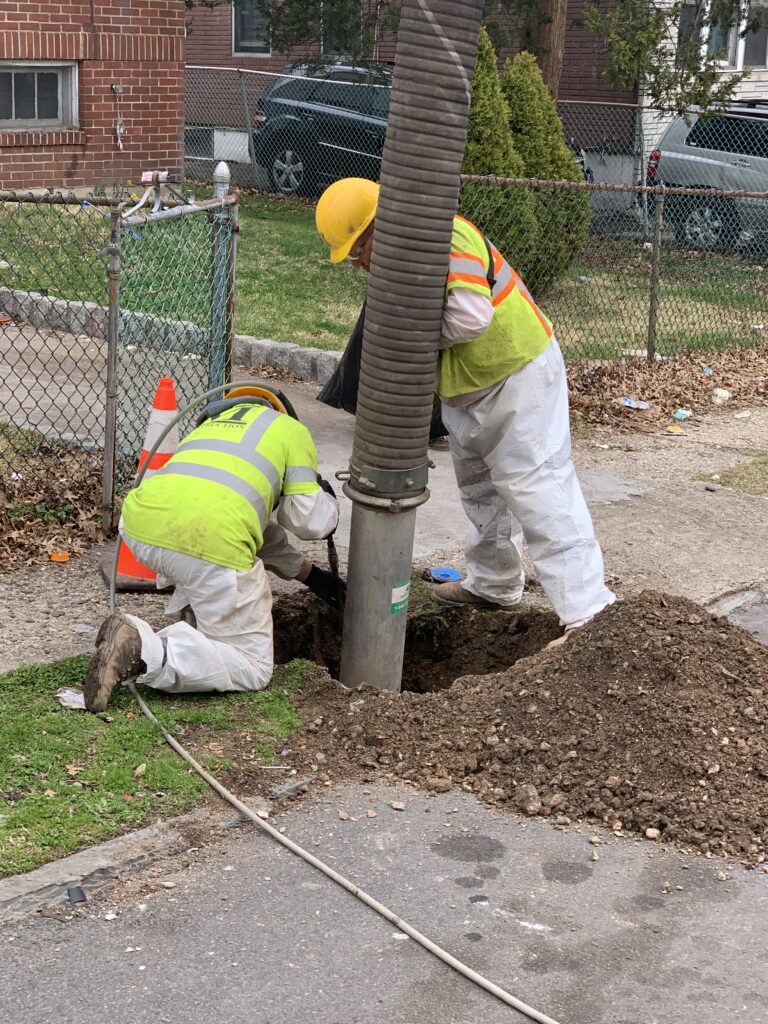
At its core, hydro excavation relies on two key elements: water and vacuum power. Here’s how the process works step by step:
- Pressurized water loosens the soil: A controlled stream of high-pressure water is directed into the ground, breaking up compacted soil or frozen material without damaging buried assets.
- Vacuum extraction removes debris: A powerful suction hose simultaneously removes the loosened soil and slurry, transferring it into a debris tank located on the hydrovac truck.
- Clean, precise results: The exposed area remains clean, stable, and ready for inspection, repair, or new installation—no piles of excavated dirt, no damaged utilities, and minimal site restoration.
Many hydrovac systems use heated water, allowing excavation to continue even in cold-weather conditions when the ground is frozen. This makes hydro excavation a year-round solution for municipalities with critical maintenance schedules.
Advantages Over Traditional Excavation
For public agencies and contractors working in high-traffic or densely developed areas, hydro excavation services provide several clear advantages over mechanical digging:
Greater Safety
Hydro excavation drastically reduces the risk of striking underground utilities such as gas, fiber optic, or electric lines. This not only protects infrastructure but also keeps workers and nearby communities safe from potential hazards.
Higher Accuracy
Pressurized water allows for precise, targeted digging. Crews can safely expose specific sections of pipe or conduit without unnecessary over-digging or damage to adjacent assets.
Minimal Surface Disruption
Because hydro excavation uses small access points, it causes significantly less surface disturbance than open trench excavation. Roads, sidewalks, and landscaping remain largely intact, reducing the need for extensive restoration.
Environmental Responsibility
This method produces less dust, noise, and vibration, minimizing its environmental footprint. It also reduces the risk of contaminating the surrounding soil or groundwater by keeping the excavation contained.
Reduced Project Costs
With hydro excavation services, the overall project cost is often lower. Shorter timelines, fewer utility conflicts, and limited surface restoration mean municipalities see long-term savings.
Year-Round Functionality
Unlike traditional excavation, which may halt in winter, hydro excavation can continue in freezing conditions using heated water, keeping essential infrastructure projects on schedule.
When to Choose Hydro Excavation Services
Municipal and public infrastructure projects often face strict constraints on time, space, and safety. Hydro excavation is particularly advantageous in scenarios such as:
- Densely populated urban areas: Where buried utilities are congested and surface disruption must be minimized.
- Roadway and bridge projects: When work must be completed without obstructing traffic flow.
- Environmentally sensitive zones: Parks, wetlands, and waterfronts where disturbance must be limited.
- Public facilities and campuses: Schools, hospitals, and government complexes requiring low-impact excavation.
- Emergency response situations: When crews must locate and access damaged utilities quickly and accurately.
In these settings, hydro excavation services allow municipalities to meet project goals efficiently while preserving the safety and integrity of their infrastructure.
Long-Term Benefits for Municipal Infrastructure
Beyond its immediate operational advantages, hydro excavation supports the long-term sustainability of municipal and public infrastructure management. By preventing accidental damage to utilities, the method reduces the likelihood of service disruptions, environmental contamination, and costly repairs.
It also enables better recordkeeping and asset mapping. Because hydro excavation exposes existing utilities with precision, municipalities can update GIS (geographic information system) data more accurately, ensuring future projects are planned and executed with greater confidence.
Ultimately, hydro excavation isn’t just about digging differently—it’s about managing infrastructure smarter.
Montana Construction: Leaders in Hydro Excavation Services
With decades of experience in civil construction, underground utility work, and infrastructure repair, Montana Construction has earned a reputation for safety, precision, and professionalism. Our hydro excavation services represent a natural extension of our commitment to innovation and excellence in the field.
Montana Construction’s advanced hydrovac equipment and highly trained crews deliver the accuracy and control public agencies depend on. Each project is executed with careful coordination, ensuring compliance with safety regulations, environmental standards, and municipal specifications.
From exposing sewer mains and water lines to assisting with emergency utility repairs, Montana Construction provides solutions that keep essential services running efficiently. Their approach minimizes disruption, maximizes productivity, and supports the long-term reliability of public infrastructure systems.
When accuracy, safety, and experience matter most, municipalities and government agencies trust Montana Construction to get the job done right every time.
To learn more about our hydro excavation services or to discuss an upcoming municipal project, contact us today.
Hydro Excavation Service FAQs
What are hydro excavation services?
Hydro excavation services use pressurized water and a high-powered vacuum to safely remove soil and expose underground utilities with minimal disruption.
How does hydro excavation differ from traditional excavation?
Unlike mechanical digging, hydro excavation is non-destructive. It relies on water pressure instead of heavy equipment, reducing the risk of damaging existing utilities.
Why are hydro excavation services ideal for municipalities and public works?
They allow crews to excavate accurately in congested utility zones, protect critical infrastructure, and complete projects faster with less surface damage.
Can hydro excavation be used in cold weather?
Yes. Hydrovac equipment can use heated water to cut through frozen soil, allowing year-round excavation for time-sensitive infrastructure projects.
What are the main benefits of hydro excavation?
Key advantages include improved safety, greater precision, lower restoration costs, and minimal environmental impact compared to traditional excavation.
In what situations is hydro excavation most useful?
It’s ideal for utility locating, sewer and water line exposure, storm drain installation, and confined-space digging in urban or high-traffic areas.
How does hydro excavation improve safety on job sites?
By eliminating the need for mechanical digging around buried utilities, it greatly reduces the chance of striking gas, electric, or communication lines.
Why should public agencies choose Montana Construction for hydro excavation?
Montana Construction combines decades of civil construction experience with state-of-the-art hydrovac equipment, delivering precise, compliant, and efficient results for municipalities and infrastructure clients.